


Markets absorbed an equity correction, an energy shock and a sharp reset in rate expectations – then kept moving forward.
Remain bullish, but do not confuse resilience with calm. Broader equity leadership and healthy earnings are encouraging; inflation and geopolitics keep the margin for error narrow.
At the start of 2026, investors expected easing inflation, additional Federal Reserve (Fed) rate cuts and another year led by artificial intelligence. At midyear, the AI investment cycle remains powerful, with a new appreciation for Return on Investment (ROI). Energy supply disruptions lifted headline inflation, although oil prices are now lower than when the conflict with Iran started. The more useful signal is how markets responded. U.S. equities recovered from a nearly 10% pullback in Q1, as earnings remained supportive and leadership widened beyond the largest technology stocks with US Small Cap and Emerging Markets stocks exhibiting the best relative performance.
Market leadership in 2026 has been less concentrated than in recent years. The Emerging Markets and Russell 2000’s over 20% return YTD, mostly achieved during Q2, suggests investors have begun rewarding a wider set of companies. That breadth is constructive: durable bull markets are generally healthier when gains are not dependent on only a handful of mega-cap names. To put this in perspective, consider that as of June 30 the “Magnificent 7” have returned in aggregate 0% while the other 493 companies in the S&P 500 index have returned an aggregate of 15%. (Source: JPM “Guide to the Markets”). This is a serious departure from 2023, 2024 and 2025 where the Magnificent 7 was responsible for a large portion of overall returns.
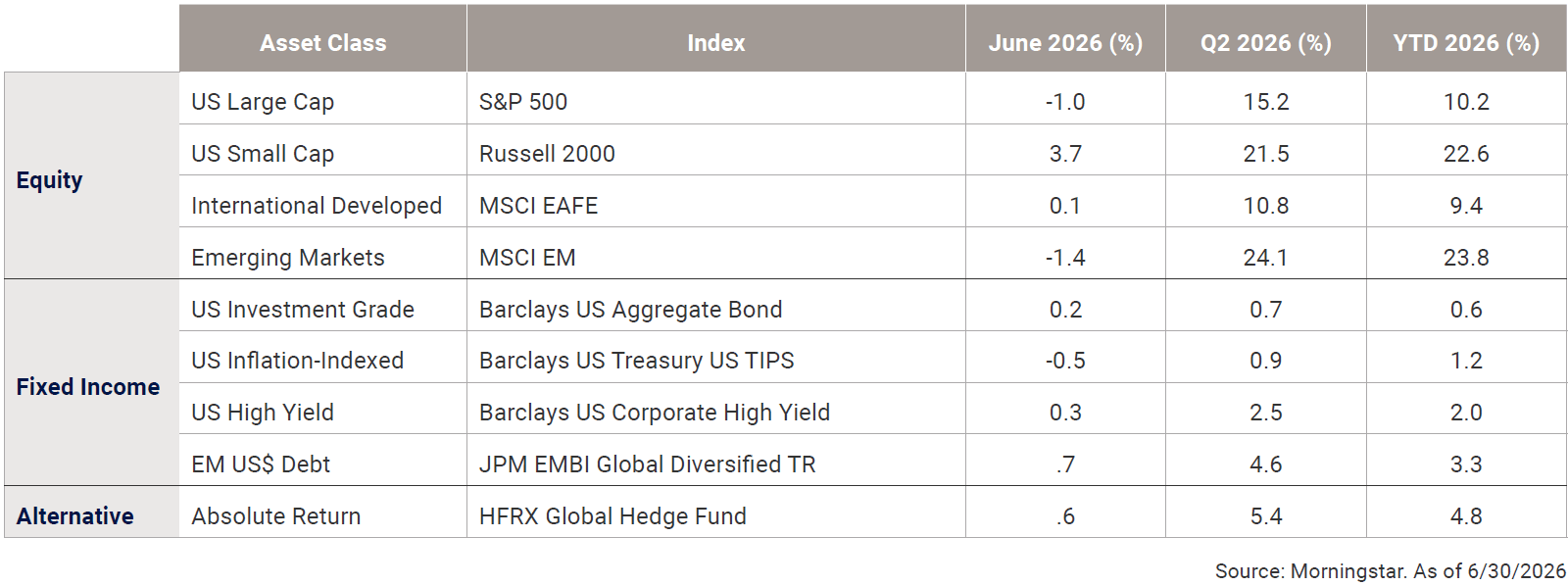
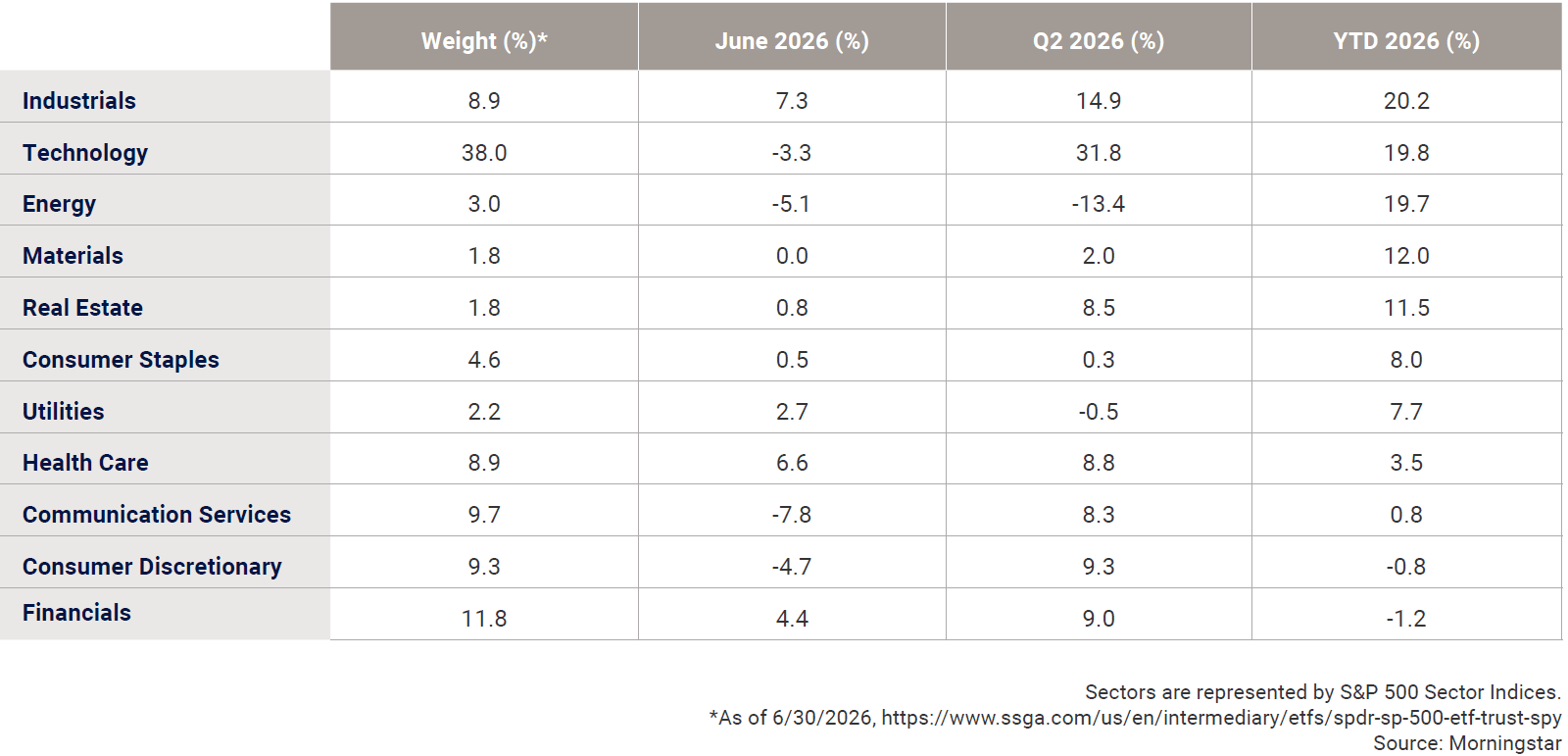
Source: Morgan Stanley, ‘2026 Midyear Investment Outlook: Constructive, Not Complacent,’ May 2026
Maintain diversified exposure across market capitalizations, sectors and regions. The opportunity set is broadening, but selectivity matters as financing costs stay elevated
The U.S. economy entered midyear with a sturdy foundation. Real GDP expanded at a 2.0% annual rate in the first quarter, business investment was a meaningful contributor, and May payrolls increased by 172,000. The unemployment rate remained at 4.3% – consistent with a labor market that has cooled without breaking.

Source: U.S. Bureau of Economic Analysis and U.S. Bureau of Labor Statistics. GDP is Q1 2026 advance estimate; CPI and labor data are for May 2026
Headline Consumer Price Index (CPI) rose 4.2% over the twelve months through May, driven in large part by a 23.5% increase in energy prices. The underlying picture was less severe: core CPI rose 2.9% over the same period. That gap matters. If energy pressure fades, inflation may resume a gradual cooling path; if supply disruptions persist, households and corporate margins could face a longer squeeze.
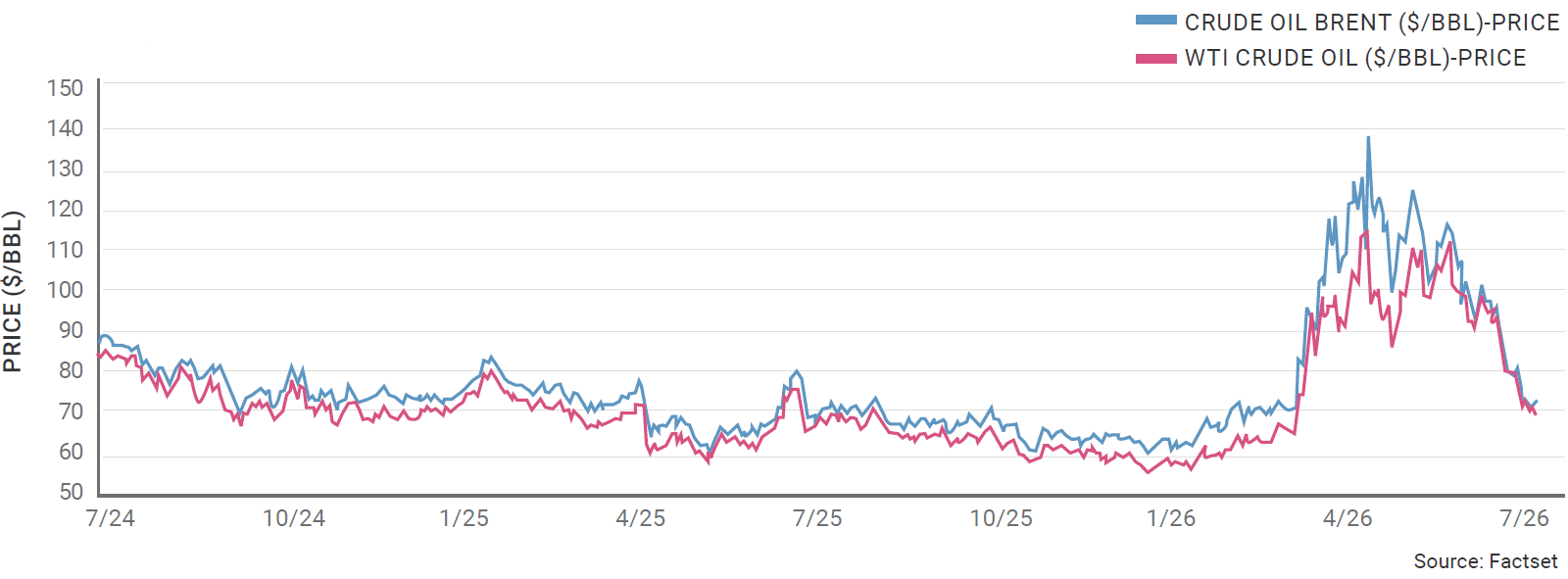
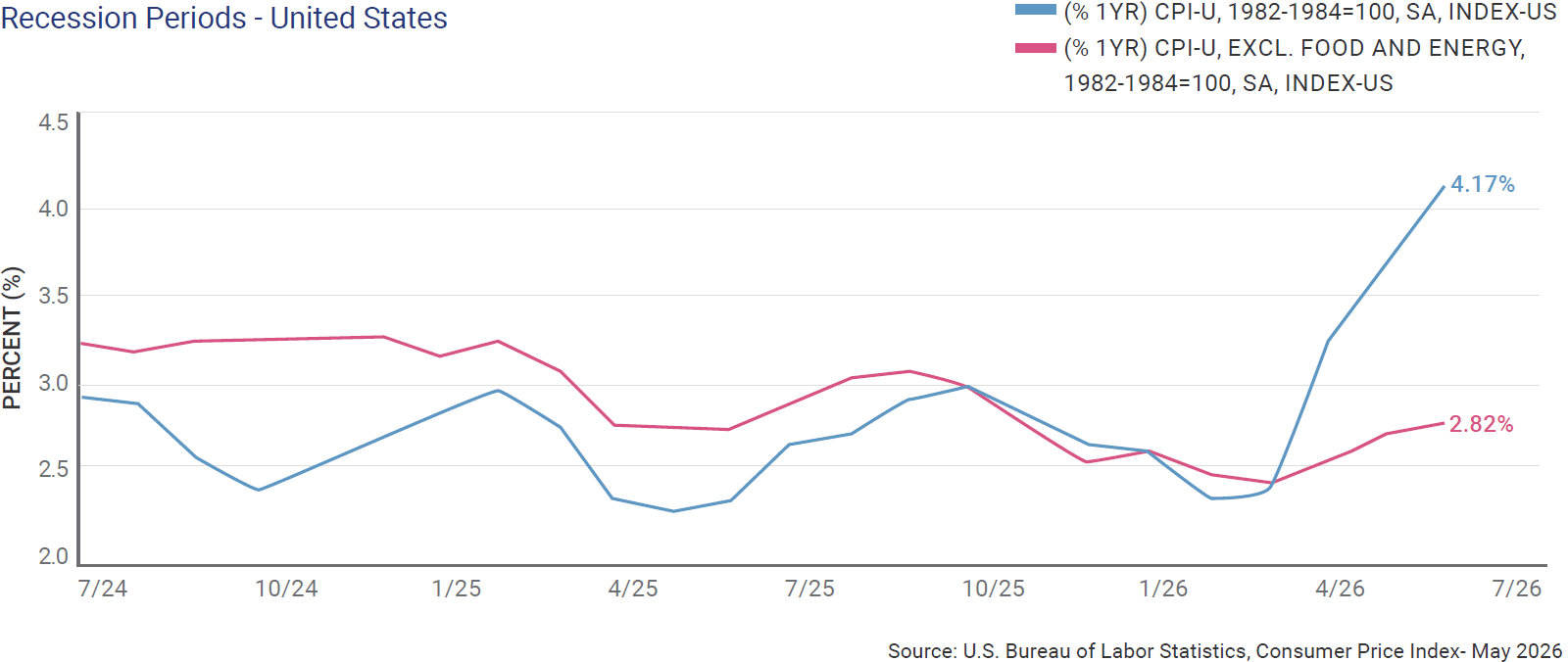
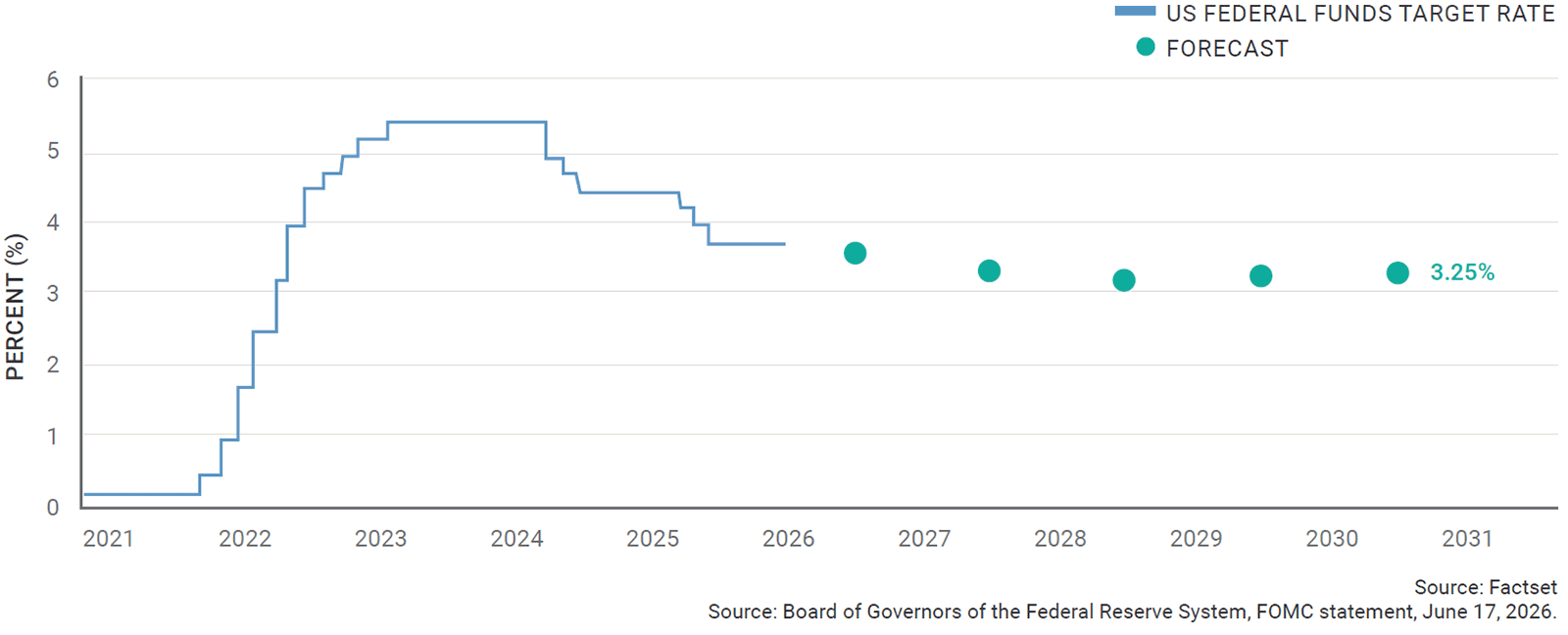
On June 17, the Federal Open Market Committee held the federal funds target range at 3.50%–3.75%. The statement described economic activity as expanding at a solid pace and inflation as elevated, in part because of energy-related supply shocks. In practical terms, the bar for rate cuts has risen. In fact, as of June 30, the market believes the Fed’s next move will be to make at least one rate hike in the back half of 2026 (CME GROUP Fed Watch Tool). Policy is likely to remain data dependent, and markets may remain sensitive to each inflation and employment release. Plus investors and pundits will start to refine how they react to comments and resulting new dynamics from a different Fed regime.
1. The AI buildout meets the cost of capital
AI remains a powerful secular driver, but the next phase will be measured in power, equipment, facilities and financing not only software adoption. Investors should distinguish between businesses supplying essential infrastructure and companies whose spending may not generate adequate returns. Like the end of the Dot-Com bubble, winners and losers in terms of companies and business models will start to emerge.
2. Energy becomes a macro variable again
Energy prices now connect geopolitics directly to consumer inflation, central-bank policy and corporate margins. A durable easing in supply constraints would improve the outlook; renewed disruption could pressure both growth and valuations as markets will dislike uncertainty.
3. Market breadth is tested
Small and mid-sized companies have benefited from broader participation. The second-half test is whether earnings revisions validate that move. Healthy breadth would support diversification; a reversal toward narrow leadership would be a signal to temper risk.
4. Income returns to portfolio construction
With policy rates still elevated and the 10-year Treasury yield near the mid-4% range in June, high-quality bonds offer meaningful income. Longer maturities are sensitive to renewed inflation and fiscal concerns so investors should tactically add to duration when given the opportunity to benefit from a rally if growth slows.
Source: Federal Reserve; market yield reference from June 17, 2026 reporting. Outlook themes informed by Webster’s January 2026 outlook and current public data.
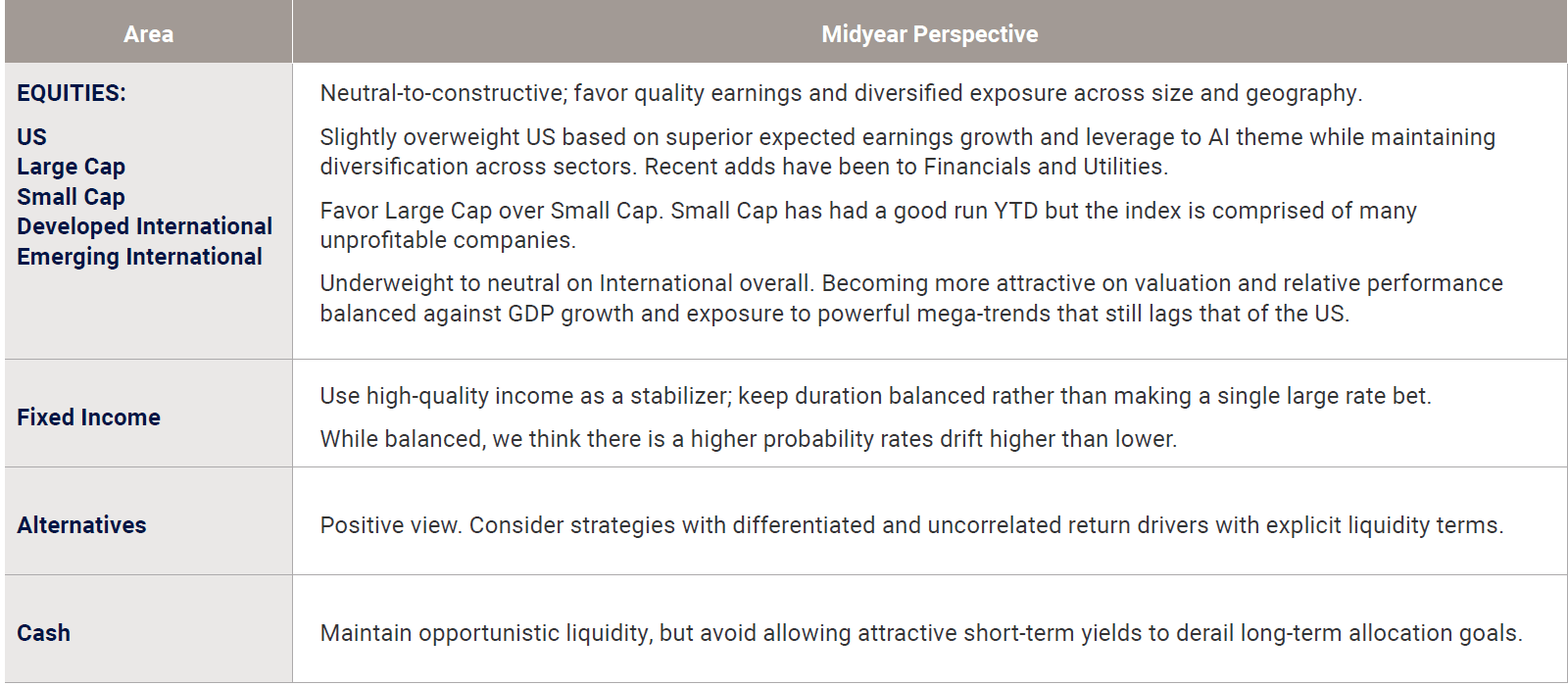
The first half of 2026 offered a useful reminder: markets can absorb considerable uncertainty when growth, earnings and liquidity remain supportive. It also showed how quickly the narrative can change. Expected rate cuts gave way to inflation vigilance (and, in turn, expectations for rate hikes); narrow leadership broadened; and energy once again became central to the outlook.
Midyear is an appropriate time to review target allocations, liquidity needs, concentrated positions and the role of income across the portfolio.
We encourage clients to remain focused on long-term objectives. Rebalancing into areas that have lagged, yet where there is a strong investment case, maintaining sufficient liquidity, and reviewing concentration risks can be more effective than reacting to each headline. A well-structured portfolio should not require a perfect forecast – it should incorporate a client’s timeframe and risk appetite as well as be positioned to tactically take advantage of opportunities resulting from inevitable dislocations.
This was produced by Webster Bank, a division of Santander Bank, N.A. The information is of general market, economic, and political conditions or
statistical summaries of financial data and is not an analysis of the price or market for any product or transaction.
Under no circumstances should the information be considered trading advice or a recommendation or solicitation to buy or sell any products or services or a
commitment to enter into any transaction. You should consult with your own independent advisors before taking any action based on the information.
The information and opinions presented are current only as of the date of writing, without regard to the date on which you may access or read this information.
All opinions and estimates are subject to change at any time without notice. This material may not be reproduced or redistributed without Webster Bank’s
express written permission.
Investment, trust, credit and banking services are offered by Webster Private Bank, a department of Webster Bank, a division of Santander Bank, N.A. Investment products offered by Webster Private Bank are not FDIC or government insured; are not guaranteed by Webster Bank, a division of Santander Bank, N.A.; may involve investment risks, including loss of principal amount invested; and are not deposits or other obligations of Webster Bank, a division of Santander Bank, N.A. Webster Private Bank is not in the business of providing tax or legal advice. Consult with your independent attorney, tax consultant or other professional advisor for final recommendations and before changing or implementing any financial, tax or estate planning advice.
All credit products are subject to the normal credit approval process.