


For the second year in a row, Webster Bank worked with Crisil Coalition Greenwich to survey 200 senior financial decision-makers at U.S. businesses with annual revenue between $10M and $500M. Last year, CFOs projected optimism and confidence. This year, the outlook is more measured. Growth remains a priority, but financial leaders are pursuing it more selectively — balancing opportunity with economic uncertainty, capital constraints, cybersecurity concerns and the rapid adoption of AI.
Overall there’s been a shift from aggressive growth to selective growth. In the current economic environment, only one in four firms will continue to aggressively pursue growth opportunities, while others will do so more selectively than in years prior. Midsized companies are showing most significant selectivity at 73%, as compared to 18% in 2025.
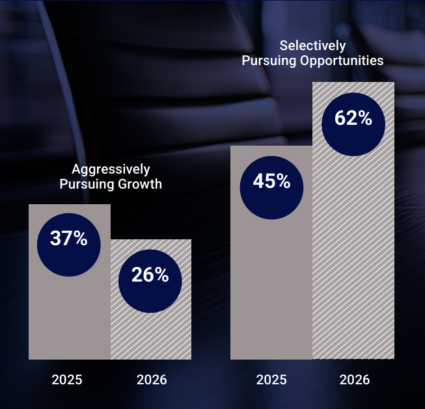
Totals: Companies of all sizes
In 2026, CFOs are still focused on growth — but the posture has changed. Strategy now means being more selective, more disciplined and more alert to risk
Selective growth replaces aggressive growth. Strategic growth remains the top priority, but surveyed executives are approaching opportunity with more discipline. While 36% rank growth initiatives as most important, 62% say they are pursuing opportunities selectively.
Uncertainty is shaping the agenda. Economic uncertainty, cybersecurity and AI adoption top the list of concerns for 2026. Financial leaders are balancing growth with risk, as inflation, interest rates, fraud threats and technology disruption continue to complicate planning
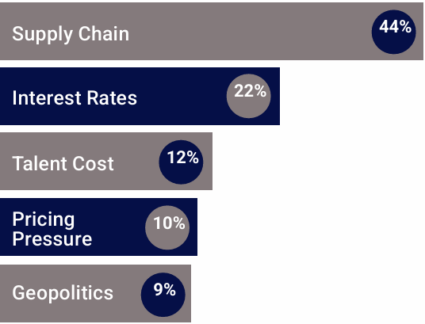
Margin pressure is forcing sharper choices. With cost management, including supply chain, ranking as the top pressure point, executives are focused on protecting performance while preserving room for strategic investment.
Customer behavior has become harder to forecast. Four out of five financial leaders are concerned about shifts in customer behavior affecting revenue stability. Increased price sensitivity, delayed purchases and declining loyalty are making revenue harder to predict — and strategy harder to set.
As CFOs navigate uncertainty, the value of a partner is increasingly measured not just by capabilities, but by trust.
30% of executives cite trustworthiness as the top wallet-share factor. Trustworthiness is now the most cited factor in determining which banking providers earn a greater share of business. 30% of financial leaders cite trustworthiness, putting it ahead of credit policy, ease of doing business and relationship managers.
Adisory services continue to lead. When considering strategic growth initiatives, executives rank strategic growth advisory services as the most valuable support. Nearly half cite advisory services — including debt structuring and acquisition financing — followed by valuation and exit/succession planning expertise.
A majority of executives say partners are very important to strategy. As companies pursue growth more selectively, partners still play a central role. 62% of executives say a banking or non-banking partner who provides guidance and support on strategic growth initiatives is very important.
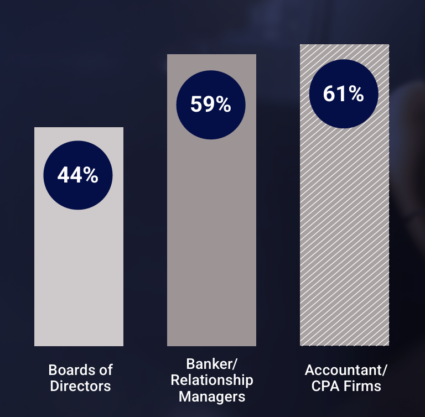
In times of uncertainty, leaders are turning to a range of trusted advisors, showing that executives value both financial expertise and outside perspective.
A key takeaway from our survey: Business leaders are still pursuing growth — but with sharper focus, stronger risk awareness and a greater need for trusted guidance. Below are five recommendations based on the results:
Want to learn more? Contact us.
The opinions and views herein are for informational purposes only and are not intended to provide specific advice or recommendations. Please consult professional advisors with regard to your situation.


